Homer lab
Eleven counts over the Greek text of the Odyssey — 12,107 lines in content/homer/, tallied by scripts/homer-stats.py. Nothing here is an estimate; every number is a grep against the poem. The two closing plates are not counts at all: the places themselves, drawn from the elevation model of the earth.
THE PREFAB POEM
exact-repeat census over every line · the top formulas ranked · 17.0% of the Odyssey is a line the poet has used before
A LINE COUNTS AS A REPEAT IF ITS LETTERS MATCH ANOTHER LINE OF THE SAME POEM EXACTLY. THE CHAMPIONS ARE ALL MACHINERY: SPEECH TAGS, DAWNS, MEALS.
source: content/homer · scripts/homer-stats.py
EPITHETS, COUNTED TO THEIR OWNERS
the Odyssey's formula systems as fingerprints · πολύτροπος — the word the poem opens on — occurs twice
πολύτροπος — THE WORD THE WHOLE ODYSSEY OPENS ON — OCCURS EXACTLY TWICE (1.1, 10.330).
source: content/homer · scripts/homer-stats.py
WHO IS ON STAGE
lines naming each character, per book of the Odyssey · row-scaled ink · the Apologoi bracket marks the four books Odysseus narrates
TELEMACHUS CARRIES 1–4 THEN VANISHES FOR TEN BOOKS; PENELOPE IS SILENT FROM 5 TO 15; CIRCE AND CALYPSO EACH OWN THEIR ISLAND AND NOTHING ELSE.
View chart data
source: content/homer · scripts/homer-stats.py
WHO GETS THE FLOOR
speeches whose tag line names the speaker, attributed by grep · a count of speeches, not of lines spoken
255 SPEECHES WHOSE TAG LINE NAMES THE SPEAKER. A TAG-LINE COUNT, NOT A SHARE OF LINES — BOOKS 9–12 ARE ONE UNBROKEN ODYSSEUS SPEECH FOUR BOOKS LONG.
EUMAEUS IS THE ONLY ONE HOMER ADDRESSES DIRECTLY: “THEN YOU ANSWERED HIM, SWINEHERD EUMAEUS.”
source: content/homer · scripts/homer-stats.py
THE WORD HOARD
tokens, distinct word-forms, and the hapax share — more than half of the poem's forms are used exactly once
MORE THAN HALF OF THE POEM’S WORD-FORMS ARE HAPAX — SPOKEN ONCE IN THE WHOLE EPIC AND NEVER AGAIN. THE FORMULAS REPEAT SO THE VOCABULARY DOESN’T HAVE TO.
source: content/homer · scripts/homer-stats.py
THE DAWN CLOCK
every ῥοδοδάκτυλος at its true position in the poem · 20 full day-opening formulas, two exceptions · one dawn withheld by Athena at 23.241
EVERY LINE CONTAINING ῥοδοδάκτυλος, AT ITS TRUE POSITION IN THE POEM. SOLID: THE FULL DAY-OPENING FORMULA. BOOK 9 — THE CYCLOPS — TICKS FIVE DAWNS, THE POEM’S DENSEST STRETCH; A SEVENTH OF THE POEM PASSES BETWEEN 19.428 AND THE HELD DAWN AT 23.241.
source: content/homer · scripts/homer-stats.py
THE SURVIVING TONGUE
a survival curve for the poem's word-forms, not a comprehension score · 100% as sung · 59% alive by Plato · 54% alive today — the break predates Plato, not the Middle Ages
WHAT IS COUNTED: SURFACE FORMS, DIACRITICS FOLDED. “ALIVE TODAY” = OCCURS ≥5× IN A MODERN GREEK SUBTITLE CORPUS; “ALIVE IN CLASSICAL GREEK” = THAT, PLUS EVERY FORM ATTESTED IN ≥2 OF FIVE ATTIC PROSE AUTHORS — WORDS DON’T RESURRECT, SO A FORM ALIVE TODAY WAS ALIVE IN ANTIQUITY. THE POEM’S OWN ERA SCORES 100% BY DEFINITION. ELIDED FRAGMENTS (δʼ, τʼ — 6% OF THE POEM) ARE EXCLUDED AS UNCLASSIFIABLE. SENSITIVITY: COUNTING ONLY WORDS OF ≥4 LETTERS, WHERE PARTICLE HOMOGRAPHS CAN’T INFLATE THE MATCH, THE CURVE READS 100% → 42% → 36% — THE SHAPE SURVIVES EVERY CUT.
WHAT IS NOT CLAIMED: THAT A READER UNDERSTANDS 54% OF HOMER. SURVIVING FORMS ARE HEAVY IN PARTICLES AND HOMOGRAPHS, AND A SENTENCE NEEDS FAR MORE THAN HALF ITS WORDS — UNTRAINED MODERN READERS GET THE ODYSSEY IN TRANSLATION. THE ARROW POINTS THE OTHER WAY TOO: ATHENS READ HIM FLUENTLY OVER 41% DEAD VOCABULARY, BECAUSE HOMER WAS THE SCHOOL TEXT — MEMORIZED, WITH GLOSSARIES (γλῶσσαι) FOR THE RESIDUE. SCHOOLING CARRIED THE POEM; THE LANGUAGE HAD ALREADY MOVED ON BEFORE PLATO, AND HAS BARELY MOVED SINCE.
source: content/homer · scripts/homer-stats.py
THE TWO DEATHS
death rate per grammatical ending, dead-by-Plato vs dead-today · the epic case system died in antiquity; the infinitive died alone on the road to Modern Greek
THE GAP BETWEEN THE BARS IS THE SECOND WAVE: ALIVE IN ATTIC, REPLACED BY να-CLAUSES SINCE.
DEATH RATES ARE SUFFIX-MATCHED ON FOLDED FORMS AGAINST THE SAME LEXICONS AS FIG 0.3.8, SO A 3SG VERB IN -ησι RIDES WITH THE DATIVES — AT THESE RATES IT DOESN’T MATTER. SOMETIMES ONLY THE CASE DIED, NOT THE WORD: θυμός LIVES WHILE θυμόν FELL — MODERN GREEK DROPPED THE ACCUSATIVE’S FINAL -ν. WORD LISTS ARE THE TOP OF EACH FATE’S FREQUENCY TABLE, HAND-FILTERED FOR HOMOGRAPH FRAUD (δῖος “GODLIKE” ONLY “SURVIVES” BY MATCHING MODERN Διός, “OF ZEUS” — NOT COUNTED).
source: content/homer · scripts/homer-stats.py
THE ACTUAL VOCABULARY
the same survival question at three depths · surface forms 54% alive, content words by headword 76%, the dictionary itself 43% — the deaths live in the inflections and the rare tail
THE DICTIONARY FORM MOVED; THE WORD IS FINE. THESE SIT IN THE “DEAD” COLUMN OF ANY NAIVE MATCH — THE LEMMA NUMBERS ABOVE ARE FLOORS.
LEMMAS FROM THE GCELANO LEMMATIZATION (79% OF TOKENS CARRY ONE; THE REST ARE CLOSED-CLASS PARTICLES). MODERN INVENTORY = HUNSPELL el_GR + THE SUBTITLE CORPUS; CLASSICAL = THAT, PLUS LEMMAS IN ≥2 OF FOUR LEMMATIZED ATTIC AUTHORS. THE HEADLINE: THREE OF EVERY FOUR CONTENT WORDS HOMER USES ARE DICTIONARY WORDS A GREEK STILL OWNS — WHAT DIED IS THE GRAMMAR (FIG 0.3.9) AND THE RARE TAIL. THE BIGGEST TRUE DEATH IS THE POEM’S CENTRAL OBJECT: ναῦς, THE SHIP.
source: content/homer · scripts/homer-stats.py
FALSE FRIENDS
words a modern Greek reads on sight and gets wrong · the guest became a foreigner, the gods became demons, the table became a bank
LINE COUNTS AND FIRST CITATIONS ARE GREP-DERIVED FROM THE CORPUS (STEM-MATCHED, SO ἀγορή CARRIES ἀγορεύω WITH IT); THE MEANINGS ARE THE EDITORIAL LAYER. THE POEM’S MORAL VOCABULARY FARED WORST: THE GUEST BECAME A FOREIGNER, THE NOBLE BECAME A FOOL, THE GODS BECAME DEMONS — AND THE ASSEMBLY BECAME THE MALL.
source: content/homer · scripts/homer-stats.py
THE VIOLENCE LEDGER
every act of violence and rape in the poem's events, perpetrator → victim, pinned to its line · 721 counted dead · the return fire of 108 suitors: two grazes
WHAT IS COUNTED · ACTS OF VIOLENCE AND RAPE IN THE POEM'S OWN EVENTS, ANCHORED TO THE LINE WHERE EACH HAPPENS. TALES TOLD INSIDE THE POEM (AGAMEMNON, TROY) AND UNACTED THREATS ARE OUT. DEATH COUNTS ARE THE SAME NUMBERS FIGS 1.1.2–1.1.5 STATE, ASSERTED EQUAL AT BUILD.
THE SHAPE · THE VOYAGE OPENS WITH ODYSSEUS AS AGGRESSOR; THE FIRST HALF IS GODS AND MONSTERS EATING MORTALS; BOOK 22 IS 108 SUITORS DEAD AGAINST TWO GRAZES. THE RAPE ROWS' VICTIMS ARE ODYSSEUS AND THE LOYAL WOMEN — THE TWELVE APPEAR ONLY IN THE PUNISHMENT ROWS, WHERE THE POEM'S OWN CHARGE (λάθρῃ, 22.445) PUTS THEM.
source: content/homer · scripts/homer-stats.py
THE TWO CLOCKS
every dawn formula and every counted death on one spine of 12,107 lines · composition of fig. 0.3.7fig. 0.3.7 · the dawn clock, with one dawn held back and fig. 0.3.12fig. 0.3.12 · violence and rape, done by whom to whom · nothing re-counted
source: homerStats.data.ts · scripts/homer-stats.py
THE PLACES: ITHACA
live terrain, ray-marched in-page from the copernicus 30 m elevation model · scripts/homer-places-build.py · the view opens from the south, over the strait
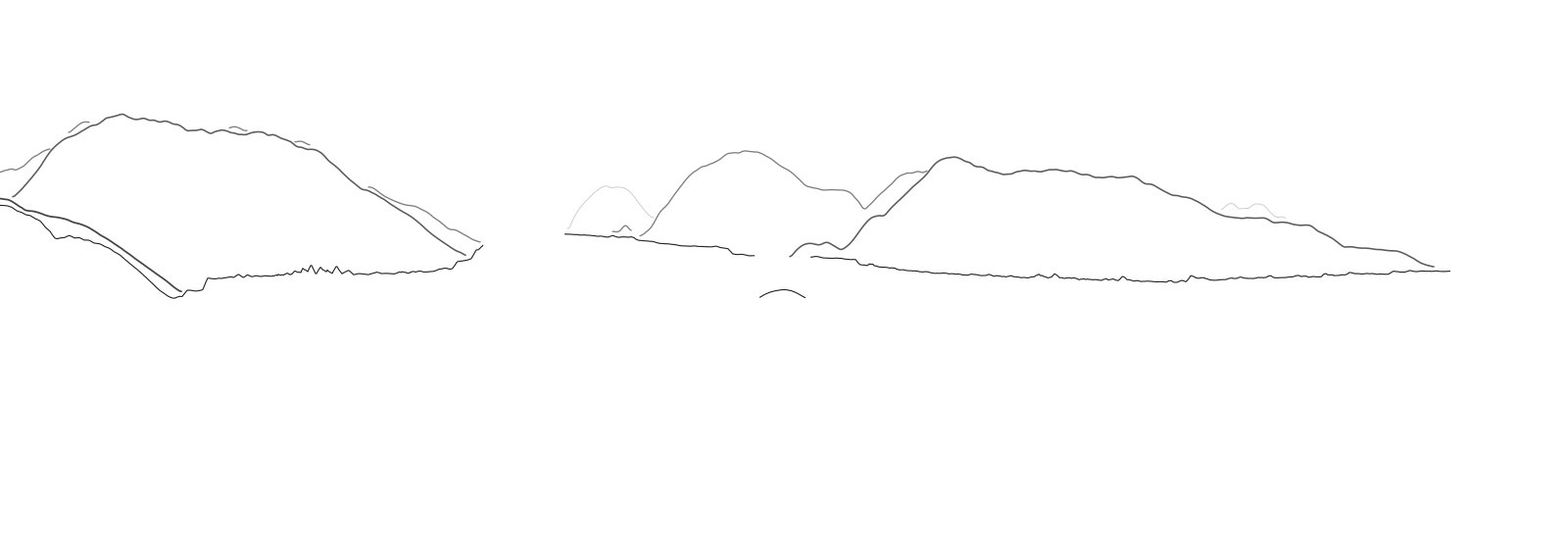
ITHACA FROM THE SOUTH — TWO MOUNTAIN LOBES JOINED AT THE AETOS ISTHMUS, NERITON BEHIND, CEPHALONIA'S FLANK ACROSS THE STRAIT. τρηχεῖʼ, ἀλλʼ ἀγαθὴ κουροτρόφος (9.27): ROUGH, BUT A GOOD NURSE OF MEN.
DRAG TO SWING THE VIEW — THE TERRAIN MOVES ONLY UNDER YOUR HAND.
source: content/homer · scripts/homer-stats.py
THE PLACES: CIRCE'S ISLAND
same model, same pen · why a cape reads as an island: the plain behind it never clears the horizon of a deck-height eye
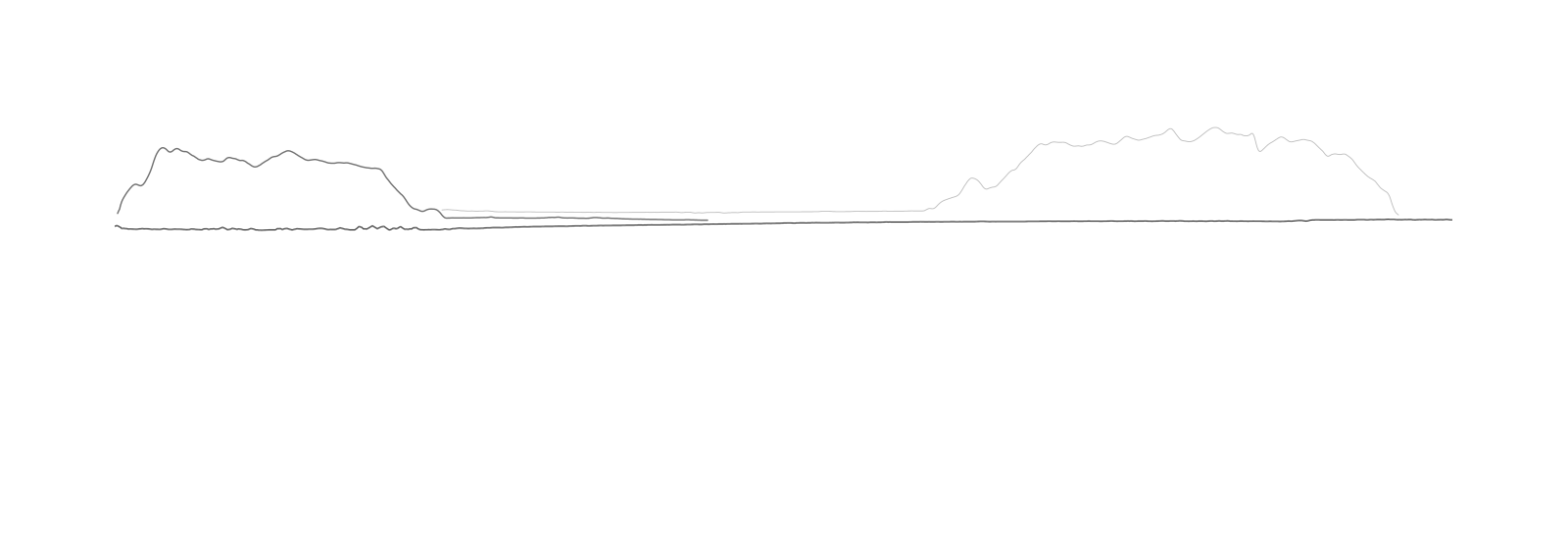
MONTE CIRCEO FROM THE SEA — 541 M STRAIGHT OUT OF THE WATER, THE PONTINE PLAIN DEAD FLAT BEHIND IT, THE LEPINI ON THE HORIZON. FROM A SHIP'S DECK IT READS AS AN ISLAND — Αἰαίην δʼ ἐς νῆσον ἀφικόμεθʼ (10.135) — AND THE TRADITION PUT CIRCE HERE.
DRAG TO SWING THE VIEW — THE TERRAIN MOVES ONLY UNDER YOUR HAND.
source: content/homer · scripts/homer-stats.py